

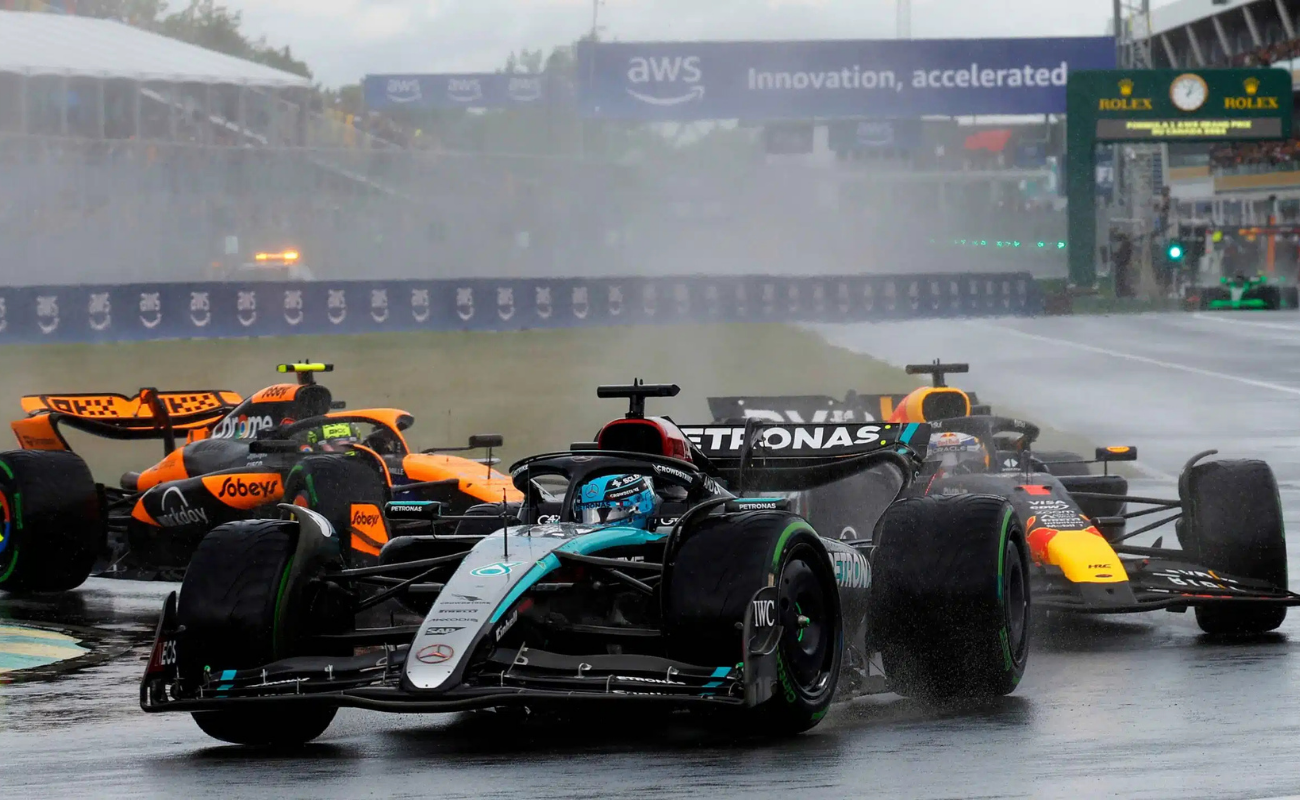
Few motorsports combine raw speed with such intricate engineering complexity as Formula 1, where cars capable of exceeding 230 miles per hour navigate demanding circuits requiring split-second decision-making across every single lap. Understanding the sport’s fundamental structure, from qualifying’s tense knockout format through the genuine physics behind these extraordinary speeds, transforms confusing race weekend broadcasts into genuinely compelling viewing. Fans wanting to follow live coverage and results can check the latest updates at dbbet argentina, where F1 action stays current throughout the racing season.
Understanding Formula 1: The Sport’s Basic Foundation
Formula 1 represents motorsport’s most technologically advanced and prestigious racing championship, bringing together the world’s most skilled drivers competing in purpose-built single-seater cars across a demanding international calendar spanning multiple continents.
The sport has operated continuously since 1950, establishing itself as the pinnacle of racing engineering, where teams pursue relentless improvement measured in fractions of a second, reflecting the sport’s genuinely obsessive relationship with performance optimization.
Beyond pure racing spectacle, Formula 1 functions as a genuine technological proving ground too, with innovations developed for competitive racing frequently influencing broader automotive engineering and safety technology across the wider consumer vehicle industry.
How Fast Do F1 Cars Go: Understanding Top Speed Records
Addressing how fast do f1 cars go requires distinguishing between different speed measurement contexts, since official race conditions, qualifying sessions, and unofficial testing scenarios have each produced genuinely different record figures over the sport’s extensive history.
The officially recognized fastest speed recorded during an actual Grand Prix race stands at 231.46 miles per hour, achieved by Valtteri Bottas driving a Williams during the 2016 Mexican Grand Prix, benefiting significantly from that circuit’s high-altitude location reducing air density.
An even higher unofficial figure emerged during that same 2016 season, when Bottas’s Williams reportedly reached 234.9 miles per hour during Azerbaijan Grand Prix qualifying, though this specific measurement occurred beyond the official speed trap location used for record verification purposes.
The Physics Behind Formula 1’s Extraordinary Speed
These extraordinary speeds result from a genuinely sophisticated combination of powerful hybrid power units, minimal aerodynamic drag configurations, and extremely lightweight car construction, all working together to maximize straight-line velocity potential.
Track altitude and air density significantly influence achievable top speeds too, since thinner air at elevated locations like Mexico City reduces aerodynamic resistance, allowing cars to achieve genuinely higher velocities compared to identical cars racing at sea-level circuits.
Monza, Italy’s historic circuit nicknamed the “Temple of Speed,” has produced numerous historical speed and average lap records, reflecting its distinctive layout featuring extensive straight sections where drivers spend over eighty percent of each lap running at full throttle.
Understanding Modern F1 Power Units and 2026 Regulations
Contemporary Formula 1 cars utilize sophisticated power units combining a 1.6-liter V6 internal combustion engine with an energy recovery system, collectively producing approximately one thousand horsepower through this integrated hybrid powertrain configuration.
Beginning with the 2026 season, significant regulation changes shifted the power split toward fifty percent combustion power and fifty percent electrical deployment, making battery management and electrical energy deployment more strategically critical to achieving raw speed than in previous seasons.
This regulatory overhaul initially produced somewhat slower lap times as teams worked toward mastering the genuinely complex new technology, though lap times were widely expected to improve as development continued throughout the season and teams refined their understanding of the new power unit characteristics.
F1 Qualifying: Understanding the Knockout Format
F1 qualifying operates through a three-stage knockout format first introduced in 2006, determining each driver’s starting grid position for Sunday’s Grand Prix through progressively shorter timed sessions held on Saturday.
The opening session, Q1, runs for eighteen minutes and includes the entire field of drivers, with the five slowest competitors eliminated at its conclusion, setting their grid positions based on their fastest recorded lap time during that particular session.
This elimination process continues through Q2, lasting fifteen minutes and again removing the five slowest remaining drivers, before the surviving ten competitors advance into Q3’s thirteen-minute session to determine the coveted pole position for Sunday’s race.
The Final Q3 Shootout for Pole Position
Q3 represents qualifying’s ultimate pressure test, where the ten fastest remaining drivers push their cars toward absolute performance limits, typically completing one preliminary “banker lap” before attempting a final, all-or-nothing flying lap as the session clock approaches zero.
During this crucial final segment, teams typically configure their power units toward maximum aggressive settings, deploying every available kilowatt of stored hybrid energy in pursuit of securing the fastest possible single lap time before the session concludes.
The driver ultimately posting the fastest overall Q3 time earns pole position, a genuinely significant competitive advantage since starting at the front of the grid substantially reduces collision risk during the race’s chaotic opening corner sequence.
Understanding the 107% Rule and Safety Standards
Formula 1 maintains a specific safety regulation called the 107% rule, requiring every driver to record a Q1 lap time within 107% of the fastest time set during that particular session in order to earn eligibility for Sunday’s race.
This regulation, introduced back in 1996, exists specifically to prevent dangerous speed disparities between competing cars, ensuring that significantly slower vehicles don’t create genuine safety hazards by racing alongside considerably faster competitors during actual Grand Prix competition.
Drivers who fail meeting this specific threshold aren’t necessarily prevented from racing though, since stewards retain discretion to grant exceptions when external factors like mechanical failures, rather than genuine performance limitations, explain a particular driver’s underwhelming qualifying session.
Sprint Weekends and Alternative Qualifying Formats
Certain race weekends throughout the season incorporate an alternative sprint format, featuring a separate, shorter qualifying session called the Sprint Shootout that determines grid positions for Saturday’s abbreviated hundred-kilometer sprint race.
This sprint qualifying format mirrors the standard three-session knockout structure but compresses each segment considerably, running just twelve, ten, and eight minutes respectively across what’s officially designated SQ1, SQ2, and SQ3 sessions.
Specific tire compound requirements also apply during sprint qualifying, with regulations mandating medium-compound tires during the first two segments while reserving softer, faster compounds exclusively for the decisive SQ3 shootout portion of the abbreviated session.
How Grid Expansion Has Changed the Qualifying Landscape
The 2026 season brought a notable structural change to Formula 1’s competitive landscape, expanding the grid to include eleven total teams following the addition of a new manufacturer entry, increasing the total driver field to twenty-two competitors.
This grid expansion required corresponding adjustments to qualifying elimination numbers, since accommodating additional cars meant qualifying’s knockout stages needed to process a larger overall field while still ultimately narrowing toward the traditional ten-car Q3 shootout format.
This structural change also affected competitive dynamics throughout the field, since additional teams and drivers competing for limited advancement spots within each qualifying segment increased overall competitive pressure during the crucial Q1 and Q2 elimination rounds.
Fastest Qualifying Laps in Formula 1 History
The fastest official qualifying lap in Formula 1 history was set at Monza in 2025, with an average speed exceeding 264 kilometers per hour, showcasing just how extraordinarily quick modern qualifying-specification cars have become under ideal low-fuel, maximum-power conditions.
This achievement surpassed previous historical benchmarks, including a longstanding record that had stood for approximately sixteen years before eventually being broken, demonstrating how continued technological development consistently pushes achievable qualifying speeds progressively higher across successive competitive seasons.
These qualifying-specific speed records typically exceed race-condition top speeds considerably, since cars run with minimal fuel loads and maximum power deployment settings during qualifying that wouldn’t prove sustainable across an entire race distance’s fuel and tire management requirements.
Why Understanding Qualifying Enhances Race Weekend Viewing
Genuinely understanding qualifying’s knockout structure and strategic nuances considerably enhances Saturday viewing experience, transforming what might otherwise appear as simple lap-time comparisons into genuinely tense elimination drama with real championship implications.
Track evolution throughout each qualifying session adds additional strategic complexity too, since circuit grip typically improves as more rubber gets deposited on the racing line, meaning timing a final flying lap correctly can meaningfully influence a driver’s ultimate qualifying position.
Whatever specific technical regulations continue evolving within Formula 1’s ongoing development, the fundamental appeal driving qualifying’s tension, genuine knockout pressure combined with the pursuit of pure, unadulterated speed, remains foundational to the sport’s enduring competitive excitement.
