

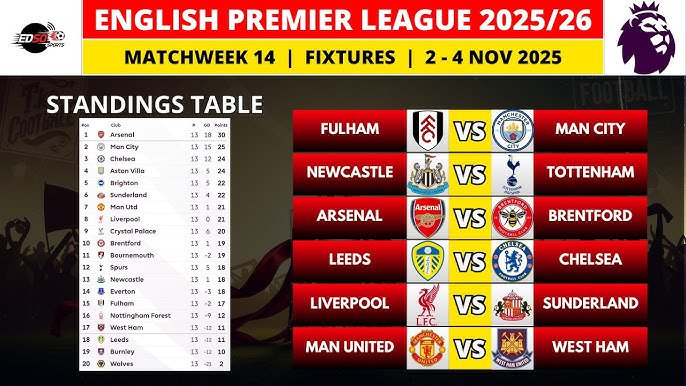
English football’s top division has been the sport’s most commercially successful and most globally watched league for over three decades — a competitive product whose combination of pace, physicality, tactical variety, and star quality has made premier league football the benchmark against which other domestic competitions are evaluated internationally. The competition’s specific character — the relentless weekly schedule, the genuine competitiveness across the table, and the specific cultural intensity that English football generates — creates a product whose appeal extends well beyond English borders into every market where football is followed seriously. Fans tracking every match with dedicated markets can find comprehensive coverage at dbbet-tz.com.
What Makes the Premier League Different
The premier league was founded in 1992 when England’s top clubs broke away from the Football League to negotiate their own television rights — a commercial decision whose consequences have shaped global football’s economic and competitive landscape more completely than any other single institutional decision in the sport’s modern history.
The specific competitive characteristics that distinguish Premier League football from other major European leagues reflect both the English game’s specific traditions and the commercial dynamics that the league’s television revenues have created. The pace of play — consistently higher than in La Liga, Serie A, or Ligue 1 — reflects both the physical profiles that Premier League clubs have historically recruited toward and the specific atmospheric pressure that English crowds create. The competitive balance across the table — the frequency with which genuinely surprising results occur throughout the season rather than concentrating at specific calendar points — makes the league compelling week-to-week in ways that more hierarchically predictable leagues cannot replicate.
Twenty clubs compete across a 38-game season, each playing every other club home and away. The bottom three clubs are relegated to the Championship at the season’s end and replaced by three promoted clubs — a competitive consequence whose magnitude transforms fixtures with relegation implications into genuinely high-stakes affairs that mid-table security cannot replicate.
Premier League Standings: Understanding the Table
Premier league standings reflect the accumulated competitive record across a season whose complete picture only fully emerges across all 38 gameweeks. The table’s structure — three points for a win, one for a draw, zero for a loss — creates the mathematical framework within which every result’s implications cascade through multiple positions simultaneously.
The title race at the table’s summit — historically between a small group of financially powerful clubs whose resources have consistently produced the squad quality that championship contention requires — generates the primary narrative thread that international audiences follow most closely across the season. Manchester City’s sustained dominance, interrupted periodically by Arsenal’s progressive improvement and Liverpool’s sustained quality under recent management, has defined the Premier League’s competitive hierarchy across the past decade in ways whose disruption by new challengers represents each season’s primary competitive question.
Midtable positioning carries its own competitive significance beyond the abstract satisfaction of a comfortable season — European qualification through league position, with Champions League berths for the top four and Europa League or Conference League qualification extending further down the table, creates genuine ambition for clubs whose title aspirations are realistic. The specific points thresholds that historically correspond to each qualification position vary across seasons based on the overall competitive quality, making each individual result’s cumulative impact on European ambitions calculable rather than merely theoretical.
Premier League Schedule: How the Season Is Structured
The premier league schedule operates across August through May — a ten-month competitive cycle whose specific structural elements create the rhythm that Premier League fandom organizes around. The opening weekend in August delivers the season’s inaugural results whose early narrative implications attract disproportionate analytical attention relative to their actual standings significance, given the subsequent 37 gameweeks’ capacity to completely transform competitive pictures that early results suggested were settled.
Gameweek scheduling reflects both the domestic calendar’s demands and the European competition commitments that the Premier League’s top clubs navigate simultaneously across Champions League, Europa League, and Conference League campaigns. Midweek fixtures — typically scheduled on Tuesdays and Wednesdays — create the congested schedule periods where squad depth becomes the primary competitive differentiator between clubs whose starting eleven quality is comparable but whose ability to maintain that quality across multiple fixtures in compressed timeframes varies significantly.
The winter fixture list — the period across December and January where the holiday schedule traditionally compresses multiple fixtures into a short calendar window — creates the specific fatigue and squad management challenges that English football’s culture has historically celebrated as the Premier League’s most distinctive test of squad quality and competitive depth.
Title Race: The Premier League’s Central Narrative
The title race that develops across each Premier League season generates the competitive narrative whose twists, momentum shifts, and eventual resolution create the specific drama that differentiates genuinely compelling league seasons from merely well-contested ones.
Manchester City’s organizational excellence — the combination of Pep Guardiola’s tactical sophistication, the City Football Group’s recruitment infrastructure, and the financial commitment that sustained championship investment requires — has made them the title race’s gravitational center across most recent seasons. Their specific ability to sustain performance quality across the fixture list’s most demanding periods while simultaneously competing in Champions League knockouts has set the competitive standard that title challengers must match rather than merely approach.
Arsenal’s development under Mikel Arteta — from the mid-table position his appointment inherited through progressive Champions League qualification and genuine title challenges that have twice come close without delivering the prize — represents the most compelling competitor development story in recent Premier League history. The specific question of whether Arsenal’s organizational improvements have reached the consistency that title races ultimately demand has been answered partially across their near-miss campaigns without the definitive resolution that a championship would provide.
Relegation Battle: The Other End of the Table
The Premier League’s relegation battle — the competitive drama at the table’s lower end that determines which three clubs descend to the Championship — generates intensity that the title race’s higher-profile status occasionally overshadows but whose emotional stakes for the clubs involved are genuinely comparable to championship pressure.
Relegation’s financial consequences — the dramatic revenue reduction that follows departure from the Premier League’s broadcast deal, the player departures that typically follow a relegated club’s reduced wage capacity, and the organizational disruption that the Championship’s different competitive demands create — mean that avoiding the bottom three is not merely a sporting objective but an institutional survival priority for clubs whose commercial structures are calibrated to Premier League revenues.
The specific clubs that contest relegation in any given season reflect the Premier League’s ruthless competitive demands — newly promoted clubs whose squad quality meets Championship standards without necessarily meeting Premier League requirements facing the most consistently challenging transitions, while established Premier League clubs whose investment has stagnated relative to the league’s commercial development occasionally find themselves in survival contests that their historical standing made seem unimaginable.
Key Players and Storylines Defining the Current Season
The Premier League’s appeal as a week-to-week competitive product rests significantly on the individual player storylines whose development across a season creates the human interest that statistics alone cannot generate. The specific battles — the Golden Boot race among the division’s most prolific scorers, the goalkeeper of the season competition, the emergence of young players whose first full Premier League campaigns establish their quality at the highest domestic level — provide the narrative threads that follow alongside the standings throughout the season.
Foreign manager influence on Premier League tactical development — the specific contributions of Guardiola’s positional football, Jurgen Klopp’s gegenpressing during his Liverpool tenure, and the various tactical approaches that international coaching influences have introduced into English football’s tactical conversation — has produced a league whose stylistic variety exceeds any previous era’s tactical diversity within the same competition.
Why the Premier League Remains Global Football’s Premier Product
The Premier League’s continued position as global football’s most commercially successful and most widely watched domestic competition reflects a combination of factors whose individual contributions are genuinely difficult to disaggregate — the specific competitive quality, the English language broadcast accessibility, the historical relationships between English clubs and global diaspora communities, and the specific atmospheric character of English football that international audiences respond to alongside the purely sporting quality of the competition itself.
The competition’s self-reinforcing commercial dynamics — the broadcast revenues that fund the transfer market activity that attracts international stars whose presence increases broadcast appeal — have created a competitive product whose global audience continues growing despite the European competitions whose Champions League format provides the highest-quality club football available anywhere in the world. The Premier League’s specific appeal is not merely competitive quality but the weekly rhythm, the cultural intensity, and the genuine uncertainty of outcomes that makes following the league across a full season one of football’s most consistently rewarding experiences.
